
Health and care
Your staff need to give patients important Information. A patient might get an appointment letter they cannot read. A pharmacist might send someone home with a medicine guide in tiny, complicated writing.
Claru gives your team Easy Read when they need it, in minutes, and for much less than a commissioned Easy Read Document.
NHS document conversion
You can use Claru for:
- Patient leaflets
- Appointment letters
- Care Plans
- Discharge information
- Medicine and pharmacy guides
- Treatment choices and consent Information
- Service user information
- Public Health campaigns
The Accessible Information Standard (AIS)
Every organisation that provides NHS care or publicly funded adult social care in England must follow the Accessible Information Standard. You must find out what Information and communication needs a person has because of a disability, write them down, and meet them. For many people with a learning disability, that means Easy Read. More about the law.
When you upload your Document, choose NHS / Healthcare as the Organisation type. Under "Main people mentioned", choose "Doctor", "Nurse", "Patient" or "Carer". More tips.
Local Councils and Government
A resident might get a letter full of legal words, or a consultation written in Policy language. A parent might try to read a leaflet about local services while their child is shouting and the dishwasher is beeping.
Clear Information helps your residents use your services, and answer your consultations.
You can use Claru for:
- Council Tax and benefits letters
- Housing and tenancy letters
- Consultation Documents and feedback forms
- Local service leaflets
- Community and safety campaigns
- Accessibility Statements and Policy summaries
- Equality Objectives and equality reports
- Voting and election guides
Your duties
Councils must think about disabled people in everything they do (the Public Sector Equality Duty). The Care Act 2014 says the Information and advice councils give about care must be accessible. Documents you publish on your Website must be accessible too. More about the law.
When you upload your Document, choose Local Council or Government as the Organisation type. Under "Main people mentioned", choose "Council staff" or "Social worker". More tips.
Housing
A tenant might try to understand a Tenancy Agreement full of legal words. A resident might get a rent letter and not know what they need to do.
Clear Information helps tenants understand their rights and responsibilities. It can mean fewer disputes and happier tenants.
Easy Read tenancy agreements
Claru can change your Tenancy Agreement into Easy Read. Your Easy Read version explains the agreement. Keep your full agreement as the legal Document, and give the Easy Read version alongside it.
You can use Claru for:
- Tenancy Agreements
- Rent letters and payment Information
- Notices
- Repairs Policies
- Complaints procedures
- Newsletters and community Information
Housing Associations and landlords must make reasonable adjustments for disabled tenants (Equality Act 2010). More about the law.
When you upload your Document, choose Housing as the Organisation type. Under "Main people mentioned", choose "Manager" or "Family member". More tips.
Schools, colleges and universities

A student might try to understand a course handbook written in complicated, academic language. A parent might get a letter about their child's support plan and not know what it means.
Easy Read helps everyone take part, and keeps the focus on learning, not on hard words.
You can use Claru for:
- Course handbooks and induction guides
- Assignment briefs and exam instructions
- Letters about support plans or attendance
- Policies and safeguarding Information
- Open day and admissions Information
Schools, colleges and universities must make reasonable adjustments for disabled students (Equality Act 2010). Public schools, colleges and universities have the Public Sector Equality Duty too. More about the law.
When you upload your Document, choose School / Education as the Organisation type. Under "Main people mentioned", choose "Student" or "Teacher". More tips.
Charities
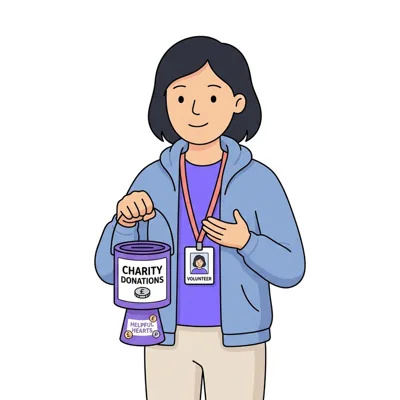
The people you help might get a service guide written in complicated language. A volunteer handbook might be full of technical words. A supporter might find your Annual Report too formal.
Easy Read helps your charity reach more people, and show your impact.
You can use Claru for:
- Service Information guides
- Rights and entitlements Information
- Support materials
- Volunteer handbooks
- Fundraising appeals
- Annual Reports and impact summaries
Charities that provide services must make reasonable adjustments for disabled people (Equality Act 2010). More about the law.
When you upload your Document, choose Charity as the Organisation type. Under "Main people mentioned", choose "Support worker" or "Social worker". More tips.
Businesses
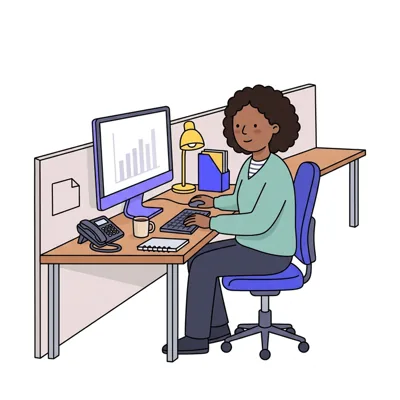
A customer might try to read a product guide full of jargon, or an insurance Policy full of legal words. An employee might not follow a Health and Safety Document because the language is too hard.
Easy Read helps your customers and your staff. It also helps you reach more people.
You can use Claru for:
- Product Information and user guides
- Terms and Conditions
- Customer service letters
- Employee handbooks
- Health and Safety Documents
- Policies and procedures
Businesses that provide goods or services to the public must make reasonable adjustments for disabled people (Equality Act 2010). So must employers, for their staff. More about the law.
When you upload your Document, choose Other as the Organisation type. Under "Main people mentioned", choose "Manager". More tips.
Get the best result
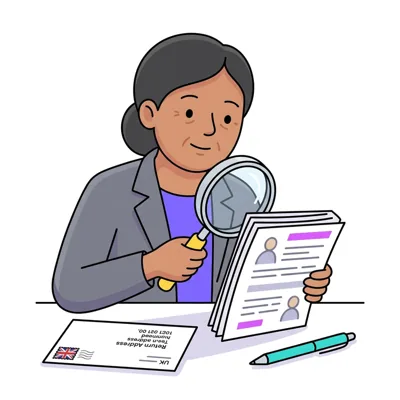
When you upload your Document, Claru asks you 2 questions. Your answers help us choose the right pictures and words.
- Organisation type: NHS / Healthcare, Local Council, Charity, School / Education, Housing, Government, or Other.
- Main people mentioned: for example Doctor, Nurse, Patient, Student, Teacher, Carer, Social worker, Support worker, Council staff, Manager or Family member.
Documents with personal details
If your Document has someone's personal details in it, you can upload a template or a version with the details taken out. Then add the details to your finished Word file.
We never guess a person's gender from their name. A picture shows a man or a woman only when your Document uses a title such as Mr, Mrs or Ms.
Every Document you send us is encrypted, and we delete it once it is changed. Read our Privacy Policy.
Easy Read and the law
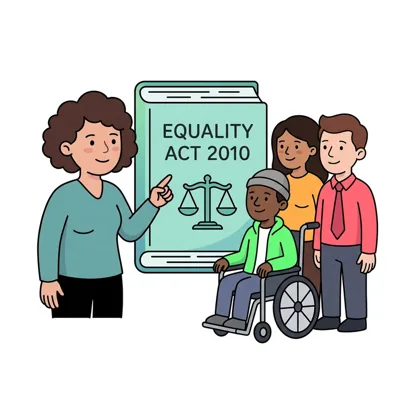
Here are the main UK laws about accessible Information. This is a short guide, not legal advice. If you are not sure what applies to you, please ask a lawyer.
The Equality Act 2010
Organisations that provide services must make reasonable adjustments for disabled people. This includes the NHS, Councils, Schools, Charities and Businesses. Employers must make reasonable adjustments for their staff too.
You should plan ahead, and not wait for someone to ask. Giving Information in a way a person can understand, such as Easy Read, is often a reasonable adjustment.
The Act says this in so many words. When an adjustment is about Information, it includes giving the Information in an accessible format (section 20(6)). Read section 20 (opens in a new tab)
The Equality Act covers England, Scotland and Wales. In Northern Ireland, the Disability Discrimination Act 1995 applies. Read the Equality Act 2010 (opens in a new tab)
The Public Sector Equality Duty
Public bodies must think about how their work affects disabled people, and other groups (section 149 of the Equality Act). Councils, NHS bodies, state schools and Government Departments all have this duty. Easy Read is one way to show you have thought about people with a learning disability. Read section 149 (opens in a new tab)
Scotland and Wales have extra duties for public bodies too. In Northern Ireland, public authorities have a similar equality duty (section 75 of the Northern Ireland Act 1998). Read section 75 (opens in a new tab)
If you write Equality Impact Assessments, you can say which Documents you made in Easy Read. Keep each Readability Certificate with your assessment, as a record of what you did.
The Accessible Information Standard
This applies to NHS care and publicly funded adult social care in England. You must find out, write down, flag, share and meet the Information and communication needs of patients, service users, carers and parents with a disability. It does not say every Document must be Easy Read. It says each person must get Information they can understand. To tell people which formats you offer, you can use our free Accessible Formats Statement Generator. Read about the AIS on the NHS England Website (opens in a new tab)
The Mental Capacity Act 2005
This applies in England and Wales. You must not treat a person as unable to make a decision until you have done everything you practically can to help them make it (section 1(3)). Giving them Information they can understand, such as Easy Read, is one of those steps. This matters most for health, care and money decisions. Read section 1 of the Mental Capacity Act (opens in a new tab)
The Care Act 2014
Councils in England must give Information and advice about care and support. This Information must be accessible to the people who need it. Read section 4 of the Care Act (opens in a new tab)
Public sector Website rules (2018)
Public sector Websites and apps must meet accessibility standards. This includes Documents you publish on your Website, such as PDFs. The rules do not ask for Easy Read. They do mean your PDFs must work with screen readers.
Claru's PDFs are tagged for screen readers (PDF/UA), with headings, lists, links and picture descriptions in the right order. Read the GOV.UK guidance (opens in a new tab)
Common questions
Do I need Easy Read for everything ?
No. Start with Information that affects people's lives: letters people must act on, Information about their rights and services, and anything they need to make a decision.
Does using Claru mean I meet the law ?
Not on its own. Easy Read is one way to meet your duties. You still need to find out what each person needs. Some people need a different format, such as large print, audio or British Sign Language.
How do I know my Easy Read is good enough ?
Please read every Document before you share it. Your Readability Certificate shows the scores before and after. For important Documents, a trained Easy Read editor can check every Sentence and picture. Read about Human Post-Editing.