
Plain English in simple words

Plain English is clear writing for most adults. It uses common words, short Sentences and a logical structure, and it cuts out jargon.
It is not "dumbing down". Experts read Plain English faster too. The Plain English Campaign has championed clear writing in the UK since 1979.
Who Plain English helps
Plain English helps everyone, not only people who find reading hard. About 1 in 6 adults in England have very poor literacy skills (National Literacy Trust, opens in a new tab).
- Staff. Policies, health and safety Documents and handbooks are easier to follow, so people are more likely to read them.
- Customers and the public. Terms and conditions, guides and letters are better understood. That means fewer complaints and more trust.
- People dealing with officialdom. Council letters, benefit notices and legal Documents are often harder than they need to be. Plain English lowers the stress.
- People learning English. Clear, simple English is much easier to follow.
The 6 Plain English rules
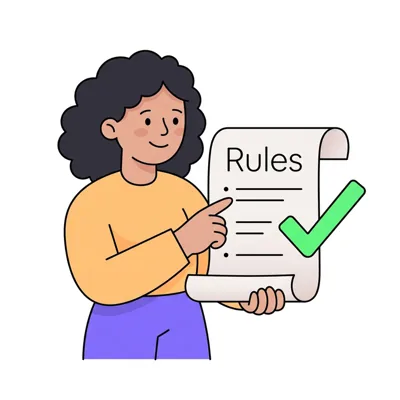
- Short Sentences. One idea in each Sentence. Aim for 15 to 20 words at most.
- Simple words. "Use", not "utilise". "Help", not "facilitate". "End", not "terminate".
- Active voice. "We will contact you", not "You will be contacted".
- No jargon. Avoid technical words and abbreviations unless your reader is an expert. If you must use one, explain it.
- Clear structure. Use headings, bullet points and space. People scan before they read.
- Write for your reader. What do they need to know ? What do they know already ? Write for them, not for yourself.
Want to see how your writing scores ? Try our free Readability Checker.
Examples
An HR Policy
Before
"Employees are required to ensure that any absence from the workplace is communicated to their line manager in a timely manner in accordance with the organisation's absence management policy and procedures as documented herein."
Plain English
If you cannot come to work, tell your manager as soon as possible. Do this before your shift starts if you can.
A legal letter
Before
"Pursuant to the aforementioned agreement and in accordance with the statutory provisions applicable hereto, the party of the first part hereby notifies the party of the second part of its intention to exercise its rights under clause 4(b) of the contractual arrangement previously entered into between the parties."
Plain English
We are writing to tell you that we are using our rights under clause 4(b) of our contract.
A Council notice
Before
"Residents are advised that the scheduled maintenance activities pertaining to the municipal waste collection infrastructure will result in a temporary modification of the standard collection timetable for the forthcoming period."
Plain English
Your bin collection times will change for a short while. We are doing maintenance work on the collection vehicles. We will write to you with your new collection dates.
These examples were written by hand. To see real Claru output, try our example letters and choose Plain English.
When to use Plain English
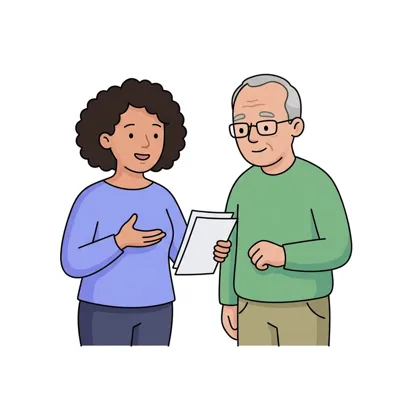
Plain English works for almost any Document for a general audience:
- Business: Policies, procedures, contracts, terms and conditions, annual reports.
- Councils and Government: public notices, guidance, forms, consultations.
- Health and care: patient Information, appointment letters, Care Plans.
- Education: letters to parents, prospectuses, admissions Information, school Policies.
- Charities: fundraising, impact reports, volunteer guides.
- Housing: Tenancy Agreements, repair notices, service charge statements.
Plain English vs Easy Read
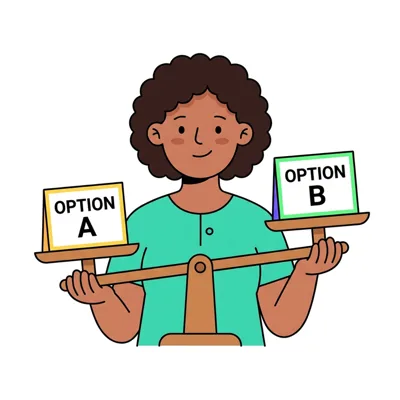
The short answer: both make Documents easier to understand. Plain English is for most adults. Easy Read is made for people with a learning disability. The right choice depends on who will read it.
| Plain English | Easy Read | |
|---|---|---|
| Made for | Most adults | People with a learning disability, and anyone who finds reading hard |
| Pictures | None | A picture beside each idea |
| Sentences | Short: 15 to 20 words at most | Very short: one idea, up to 15 words, each on a new line |
| Words | Common words, no jargon | Everyday words; hard words explained in bold |
| Looks like | A normal Document | Large text, a picture and words in each row, lots of space |
| Length | About the same as the original | Usually longer |
| Guidance | Plain English Campaign, GOV.UK style | UK Easy Read Standards 2026 |
| Often used for | HR, legal, business and public Information | Health, care, Councils, housing and Charities |
Which one do I need ?
Use Plain English when:
- your readers are the general public or most staff;
- your Document is full of legal or technical words;
- you want it to look like a normal Document.
Use Easy Read when:
- your readers include people with a learning disability;
- a person has asked for Easy Read, or their records say they need it;
- you have a duty to give accessible Information.
The same Sentence, 3 ways
Original
"The aforementioned party hereby agrees to indemnify and hold harmless the organisation against any and all liabilities, damages, losses or expenses arising therefrom."
Plain English
You agree to cover any costs or losses that the organisation has because of your actions.
Easy Read
You might do something that costs the organisation money.
If this happens, you must pay the organisation back.
Can I have both ?
Yes. Many organisations make both versions of the same Document. For example, a hospital might send a Plain English leaflet to every patient, and have an Easy Read version for patients who need it. Claru can change the same Document into both.
Not sure which to choose ? Ask the people who will read it. If you cannot ask, start with Plain English. You can add an Easy Read version later.
What the law says
The Equality Act 2010 says organisations must make reasonable adjustments for disabled people. Plain English and Easy Read can both be part of this. NHS and adult social care in England must also follow the Accessible Information Standard. For many people with a learning disability, that means Easy Read. Read more about the law.
Change your Document into Plain English
Upload your Document and choose Plain English. It costs 3p a word, with a £5 minimum. Your first Conversion is free, up to 1,000 words.
Our computer writes your Plain English version. It has not been checked by a lawyer, doctor or other professional, so please read it before you share it.